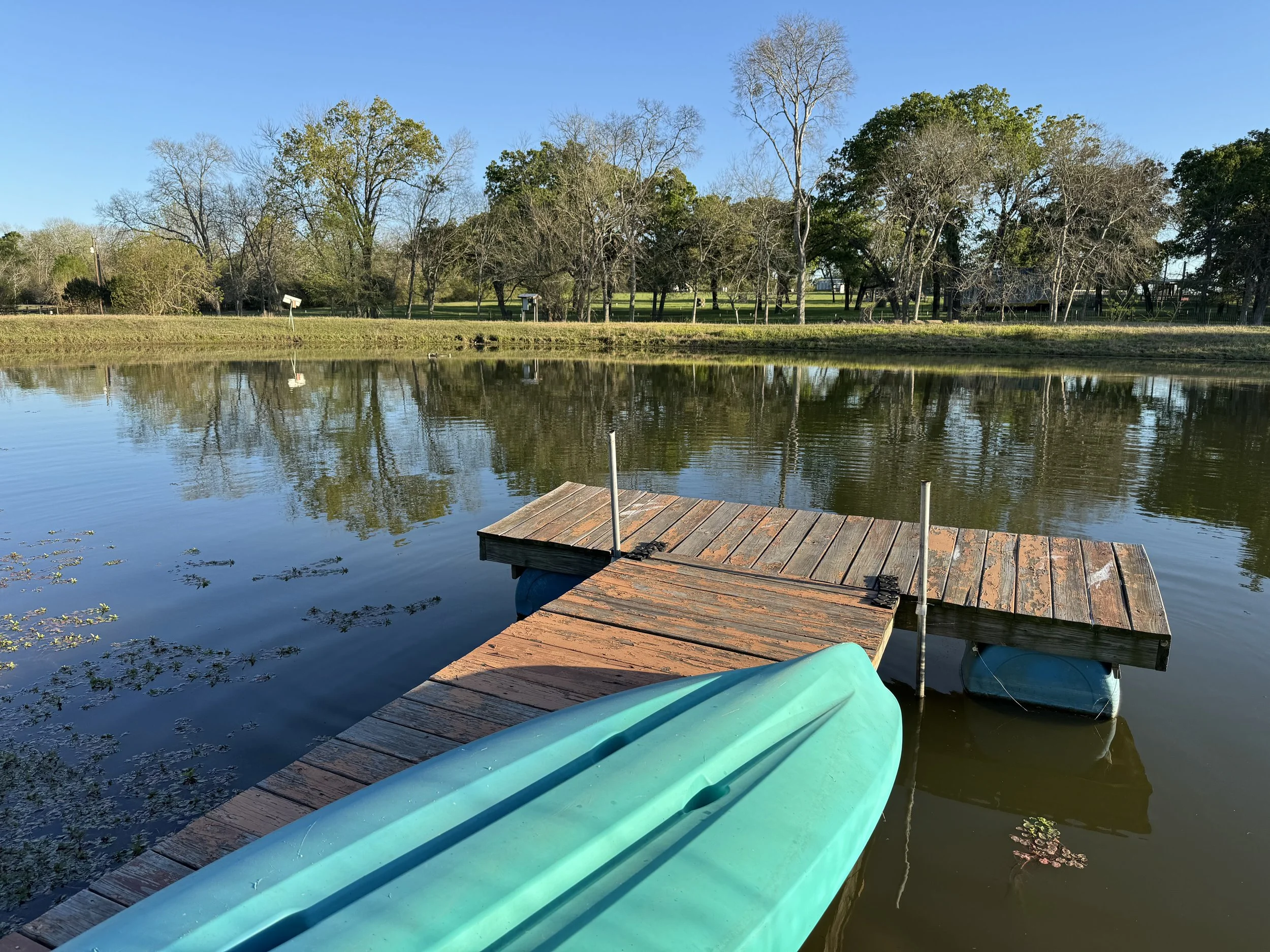
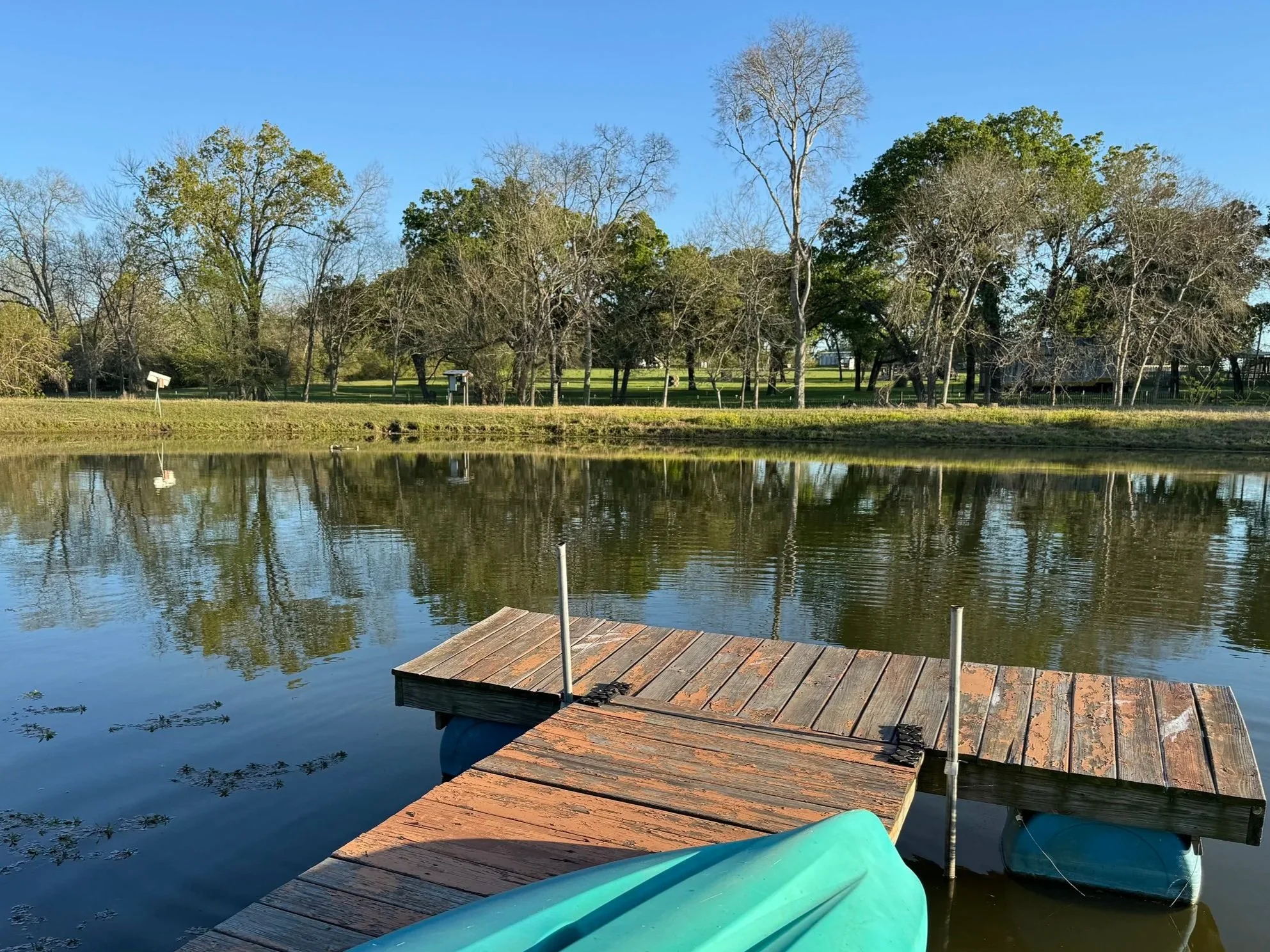
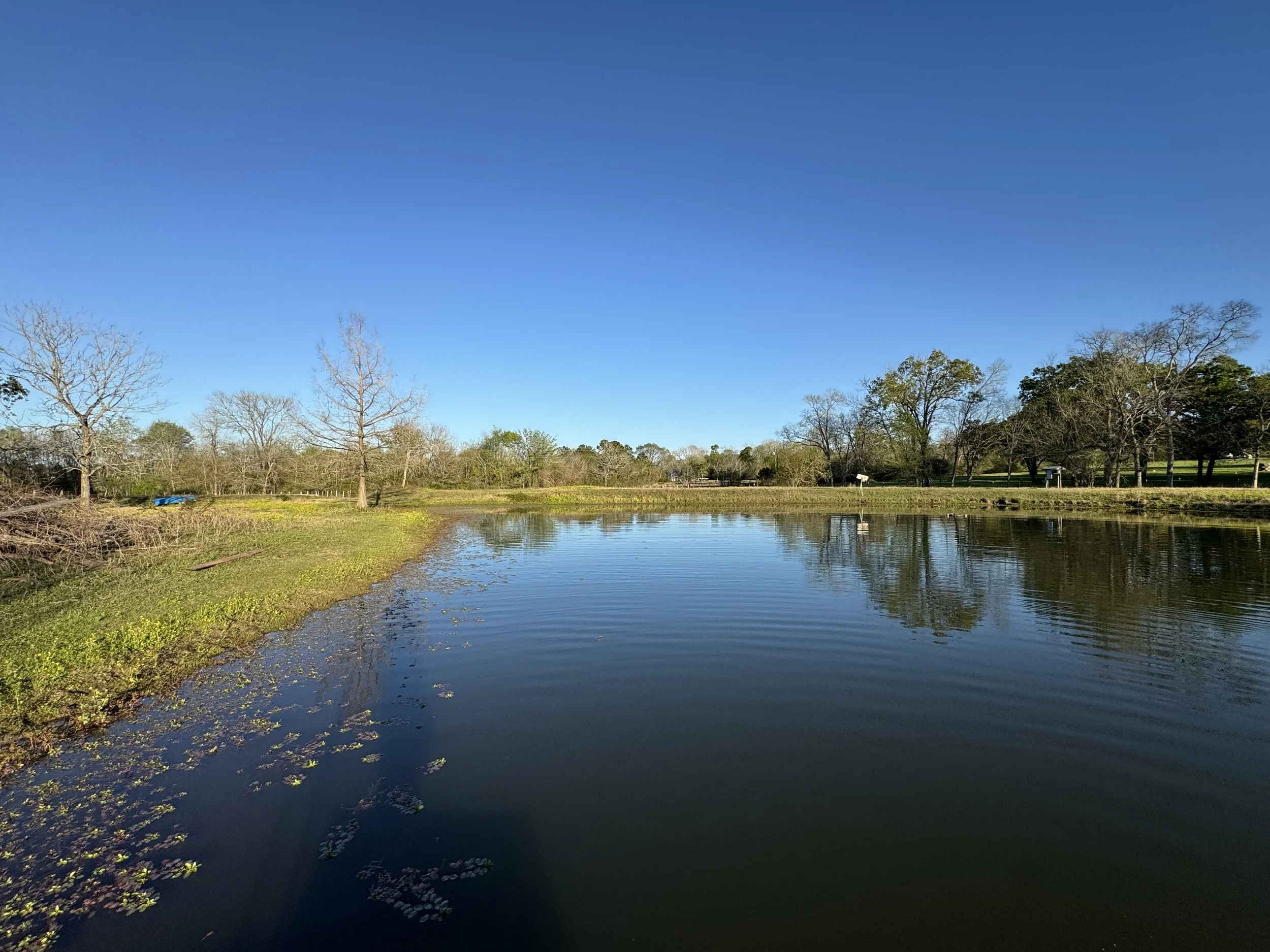
This is where our fish live, not caught on film yet. TBC
Almost two years ago Joe and I picked up five Grass Eating Carp. There’s a whole long process of applying for a fisheries license and providing lots of detailed information about the pond (dimensions, depth, vegetation, geolocation, and so on). This week, for the first time, we spotted four of them. And wow, have they grown; they look close to three feet long, which seems incredible given they were no more than six inches when we first brought them home. Needless to say, we are very excited and now go down every day to spot and count them. Here’s a more information about these remarkably helpful fish.
Grass carp (specifically sterile triploid grass carp) are used as a biological control agent to manage and eradicate invasive or overabundant aquatic vegetation in ponds, lakes, and canals. They act as a natural, cost-effective alternative to chemical herbicides, grazing on submerged weeds like hydrilla, coontail, and pondweed.
Key Purposes and Benefits:
Aquatic Weed Control: Grass carp are highly effective at controlling submerged weeds, preventing them from choking waterways.
Chemical Alternative: They provide a natural solution for clearing waterways, reducing the need for chemical herbicide treatments.
Cost-Effective Management: Stocking these fish is generally cheaper than repeated chemical applications, providing long-term vegetation management.
Targeted Consumption: They consume a wide variety of nuisance plants, including pondweeds, hydrilla, and bladderwort.
Virginia Department of Wildlife Resources (DWR) (.gov) +6
Important Considerations:
Sterility: Only triploid (sterile) grass carp are typically allowed, as they cannot reproduce and spread out of control.
Overstocking Risk: High numbers can completely eliminate all vegetation, which can harm fishing ponds by removing habitats for other fish.
Permitting: Regulations vary by location, and a permit is often required to possess and stock these fish.